A Flygt 3153.181 mechanical seal replacement should begin with the exact pump configuration, not only the number “3153.181.” Pumps can differ by production revision, article number, serial number, motor or hydraulic configuration, Ex status, and previous repair history. Verify the replacement against the real pump before service begins.
This guide focuses on seal identification, replacement verification, chamber inspection, installation decisions, and commissioning. It does not replace Xylem/Flygt documentation for model-specific disassembly, electrical work, lifting, Ex procedures, torque, oil quantity, impeller setting, or other manufacturer-specific service data.
A Practical Flygt 3153.181 Seal-Service Sequence
- Record the pump nameplate and current condition.
- Confirm the exact Flygt 3153.181 configuration and serial/article information.
- Document the existing seal arrangement before dismantling.
- Inspect the oil or seal chamber where applicable.
- Keep upper and lower seal components separated where applicable.
- Inspect shaft, sleeve, seat bores, bearings, and surrounding parts.
- Compare the old seal with the proposed replacement.
- Confirm dimensions, materials, orientation, and service-kit contents.
- Install the verified seal using the applicable Flygt instructions.
- Restore the chamber fluid and associated components to the documented condition.
- Reassemble the pump using model-specific settings.
- Complete commissioning checks before returning the pump to continuous service.
Identify the Exact Flygt 3153.181 Pump
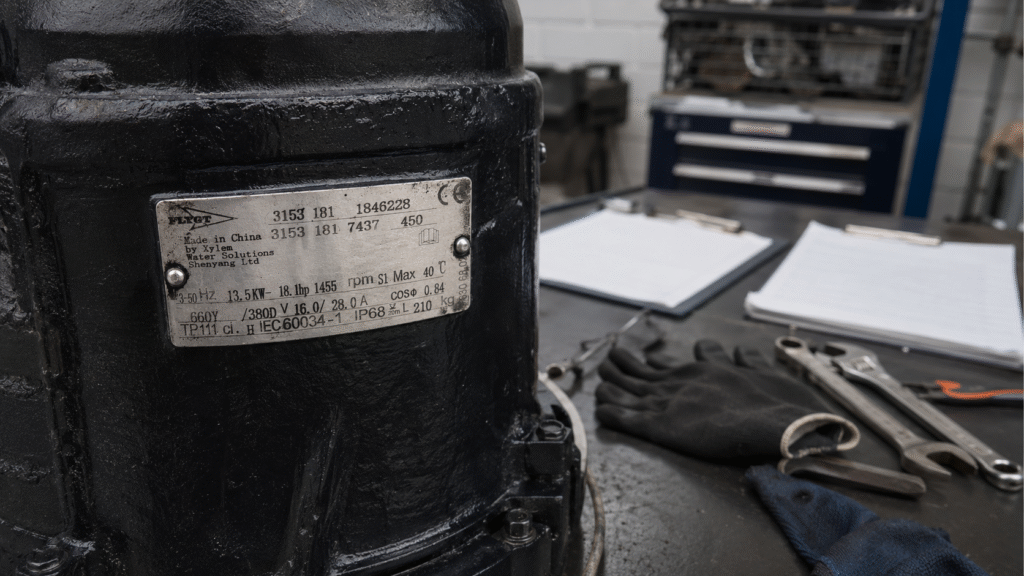
Record the complete nameplate, serial number, article or product number, motor data, production information, and any Ex marking. Do not assume every 3153.181 pump uses exactly the same service parts.
The official Xylem Flygt N 3153 product page is a useful starting reference, but the actual pump and service documentation should control the replacement decision.
Confirm Upper and Lower Seal Positions
Selected submersible pumps use more than one sealing position, often with an oil or seal chamber between them. Upper and lower seals can perform different duties and may use different materials or constructions.
Do not mix parts between positions during disassembly. Label each component group and record orientation before cleaning. The article Flygt Pump Mechanical Seals: Upper vs Lower Seals Explained provides additional background on this distinction.
Inspect the Oil or Seal Chamber
Where the pump uses an oil or seal chamber, inspect the removed fluid before disposal. Look for water ingress, contamination, metal particles, unusual color, odor, or evidence that can help explain the previous seal condition.
Do not invent or reuse a generic oil quantity. Fluid type, quantity, fill procedure, and chamber settings should come from the applicable Flygt/Xylem documentation for the exact configuration.
The Flygt Seals User Guide is a useful manufacturer reference, but model-specific service instructions remain important.
Verify the Existing Seal Before Ordering
Record the complete rotating assembly, stationary seat, spring or cartridge structure, dimensions, materials, orientation, and any markings. If the original reference is missing, use the How to Identify the Correct Mechanical Seal for a Pump workflow.
When dimensions are required, use the How to Measure a Mechanical Seal guide. Keep upper and lower components separated throughout the measurement process.
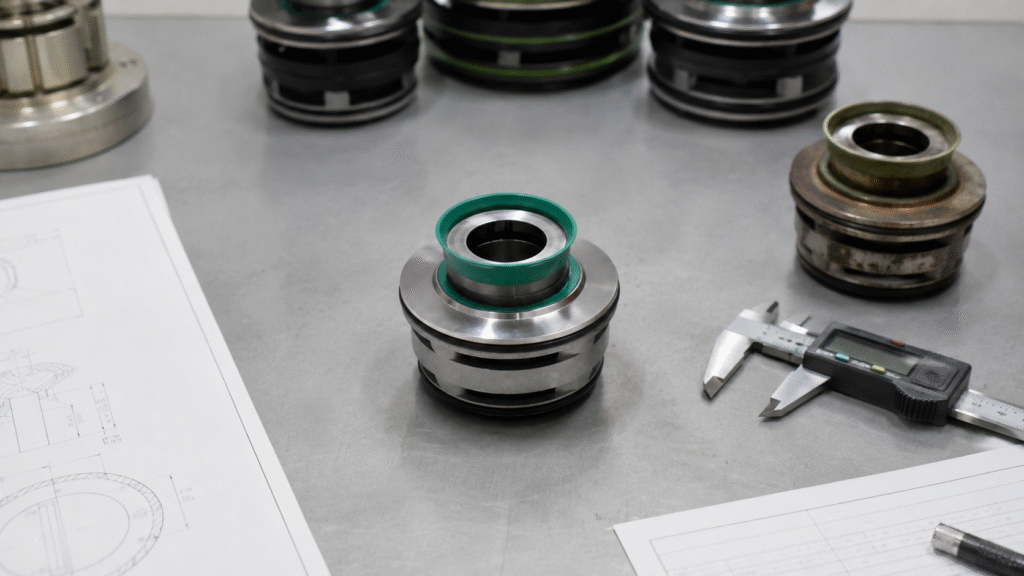
Compare the Old and New Seal Before Installation
Place the old and new components side by side. Confirm the shaft or sleeve diameter, stationary-seat profile, working length, face arrangement, spring or cartridge geometry, elastomers, orientation, and every service-kit component that affects axial position or static sealing.
A similar overall appearance is not enough. If the material combination changes, review the actual sewage, wastewater, solids, temperature, and chemical exposure. The Mechanical Seal Materials for Wastewater & Slurry Pumps guide covers that decision in detail.
Installation and Reassembly
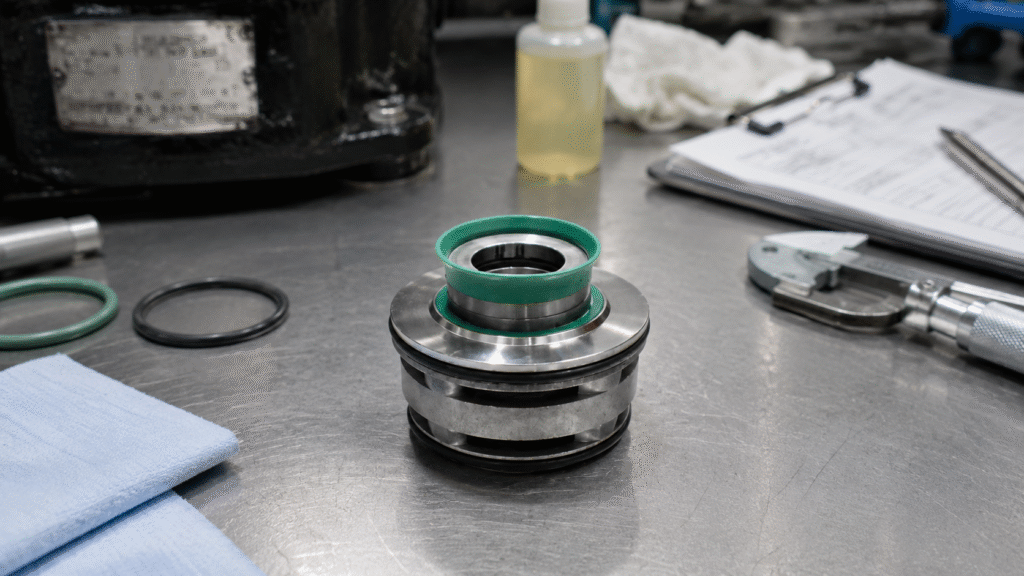
During installation, protect lapped faces, keep components clean, confirm stationary-seat orientation, and use elastomer lubricant only where the relevant instructions permit it. Check chamber plugs, O-rings, gaskets, clips, and related service parts before closing the pump.
For general face handling and component-seal principles, use the Mechanical Seal Installation Guide. The exact Flygt procedure controls model-specific assembly, torque, oil quantity, clearances, and Ex requirements.
Commissioning Checks
- Confirm all plugs, covers, seals, and service components are installed.
- Restore the oil or buffer chamber according to the applicable documentation.
- Verify electrical and Ex-related work according to authorized procedures.
- Confirm correct rotation where required by the service procedure.
- Observe leakage, current, vibration, sound, and operating behavior during commissioning.
- Stop and investigate abnormal conditions instead of assuming a new seal will bed in automatically.
Common Flygt 3153.181 Seal-Replacement Mistakes
- Ordering from “3153.181” alone without checking revision or serial information
- Mixing upper and lower seal parts
- Assuming a removed seal is still the original factory configuration
- Matching only by shaft diameter or appearance
- Ignoring oil-chamber condition or contamination evidence
- Changing face materials without reviewing the wastewater duty
- Using generic oil quantities, torque values, or clearances from another pump
- Installing a new seal without checking shaft, bearings, sleeve, and seat bores
Information to Send Before Ordering
- Complete Flygt pump designation
- Article or product number and serial number
- Production information and Ex status where applicable
- Nameplate photograph
- Existing mechanical-seal or service-kit reference
- Clear photos of each seal position and removed components
- Shaft or sleeve diameter
- Stationary-seat dimensions
- Working length and key rotating dimensions
- Face and elastomer materials if known
- Wastewater, sewage, slurry, or process-fluid details
- Solids, temperature, and operating conditions
- Required quantity and purchasing scope
Flygt 3153.181 Mechanical Seal FAQ
Is “3153.181” Enough to Identify the Mechanical Seal?
No. Use the full pump identity, serial or article information, seal position, old components, dimensions, and applicable service documentation.
Are the Upper and Lower Seals Always the Same?
No. Selected pumps can use different functions, materials, or constructions at different positions. Keep the parts separated and verify each position.
Can I Use a Generic Torque or Oil Quantity?
No. Critical torque, oil or buffer-fluid quantity, clearances, and other manufacturer-specific settings should come from the applicable Flygt/Xylem documentation for the exact configuration.
A Flygt 3153.181 mechanical seal replacement is safest when “3153.181” is treated as the start of identification rather than the complete spare-parts specification. Verify the real pump, seal position, old components, dimensions, materials, chamber condition, and replacement reference before installation.